Missing teeth can significantly impact your ability to chew, speak, and smile confidently. Fortunately, modern dentistry offers two excellent solutions for replacing missing teeth: dental implants and dentures. While both options restore your smile and function, they differ in function, longevity, and suitability. This blog post from Evergreen Dental Group dives into the key differences between dental implants and dentures to help you make an informed decision.
Understanding Dental Implants
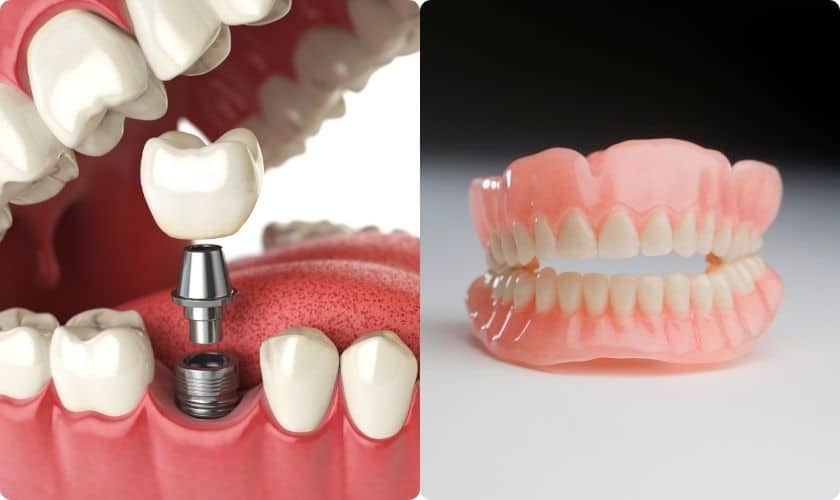
Dental implants are the gold standard for replacing missing teeth. They mimic the natural tooth structure, consisting of a titanium implant surgically placed into the jawbone, topped with a custom-made crown.
Benefits of Dental Implants:
- Function: Implants fuse with the jawbone, providing a stable and natural bite force similar to natural teeth. This allows for comfortable chewing and speaking without limitations.
- Durability: Dental implants are highly durable and can last a lifetime with proper care.
- Aesthetics: Implants look and feel like natural teeth, enhancing your smile’s appearance.
- Confidence: The stability and natural function of implants boost confidence in social interactions.
- Bone Preservation: Implants stimulate jawbone growth, preventing bone loss associated with missing teeth.
Understanding Dentures
Dentures are removable prosthetic teeth typically made from acrylic resin or a combination of acrylic and metal. They rest on the gums and may require an adhesive for additional security.
Benefits of Dentures:
- Cost: Dentures are generally less expensive than dental implants up front. However, replacement dentures may be needed periodically, adding to long-term costs.
- Convenience: Dentures are removable for cleaning and soaking overnight.
- Good Option for Some Patients: Dentures may be suitable for patients with certain health conditions or those who may not be ideal candidates for implant surgery.
Factors to Consider When Choosing Between Implants and Dentures
Here are some key factors to weigh when deciding between dental implants and dentures:
- Jawbone Health: Dental implants require a sufficient healthy jawbone for successful placement. Some patients with significant bone loss may require bone grafting procedures before implant placement. Dentures can be an option for patients with limited jawbone density.
- Desired Level of Function: If you prioritize natural bite force and unrestricted chewing, dental implants offer a superior solution. Dentures may require adjustments over time and can sometimes slip during eating or speaking.
- Lifestyle: Active individuals or those who value a confident smile may find dental implants more suitable due to their stability and natural feel.
- Budget: Dental implants typically have a higher upfront cost than dentures. However, their long-term durability makes them a cost-effective option for many patients.
Consulting a Dentist is a Key
Ultimately, the best choice between dental implants and dentures depends on your individual needs and preferences. A consultation with a dentist at Evergreen Dental Group is crucial for a thorough evaluation. Our experienced dentists will assess your jawbone health, discuss your desired outcomes, and recommend the most suitable tooth replacement solution for you.
Conclusion
Missing teeth don’t have to hold you back from a healthy smile and a confident life. By understanding the differences between dental implants and dentures, you can make an informed decision about the best path to restore your smile. Contact Evergreen Dental Group today to schedule a consultation and explore your options for achieving optimal oral health and a complete smile.