Early & Late Hours


It's Time to Get the Quality of Rest You Deserve
If you are a chronic snorer who frequently wakes up more tired than before you went to sleep, it may be time for you to seek an evaluation for obstructive sleep apnea. The condition occurs when the lower jaw and/or tongue collapse during sleep, partially or completely blocking the proper, continuous flow of air. Sufferers of sleep apnea frequently have their sleep interrupted hundreds of times per night.
Symptoms & Risks in Sleep Apnea
Sleep apnea affects millions of Americans – and because its symptoms are similar to those of other issues affecting sleep (like depression or anxiety), sleep apnea is often misdiagnosed. But the repercussions of obstructive sleep apnea are serious. In the worst cases, the condition causes premature death.
Obstructive sleep apnea is associated with several risk factors, including:
- Being overweight or obese
- Age (over the age of 55)
- Sex (males are slightly more likely to experience sleep apnea)
- Alcohol or tobacco use, especially soon before bed
- The use of certain medications for sleep, anxiety, or depression
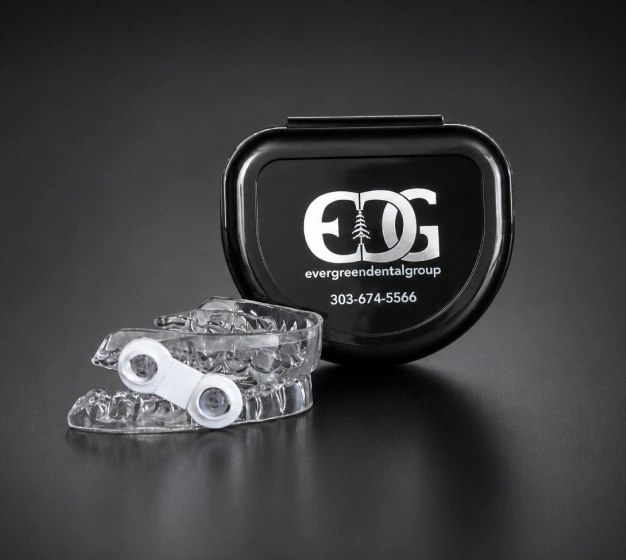
Have you recently received a diagnosis for sleep apnea from your general doctor or a sleep clinic? Our doctors provide sleep apnea therapy at Evergreen Dental Group. The removable oral appliance is an excellent alternative for patients who have not found success with CPAP. The device is small, portable, comfortable, and easy to use night after night for relief from your sleep apnea symptoms.
We invite patients in Evergreen, Golden, Idaho Springs, Conifer, and Bailey to contact us to schedule a consultation today.
Frequently Asked Questions
What is obstructive sleep apnea?
Obstructive sleep apnea (OSA) is a serious sleep disorder that occurs when the lower jaw and/or tongue collapse during sleep, partially or completely blocking the airway and interrupting breathing. These breathing interruptions can happen hundreds of times per night, preventing you from reaching the deep, restorative stages of sleep your body needs. Left untreated, sleep apnea can lead to serious health consequences. Evergreen Dental Group offers customized sleep apnea therapy for patients throughout Evergreen, Golden, Idaho Springs, Conifer, and Bailey.
What are the symptoms of sleep apnea?
Common symptoms include chronic loud snoring, gasping or choking sounds during sleep, waking up tired despite a full night of sleep, morning headaches, dry mouth or sore throat upon waking, excessive daytime fatigue, difficulty concentrating, irritability, and frequent nighttime urination. Many sleep apnea sufferers don't realize they have the condition because the symptoms occur during sleep. A partner or family member is often the first to notice the warning signs.
Who is at risk for developing sleep apnea?
Several factors can increase your risk of obstructive sleep apnea, including being overweight or obese, being over the age of 55, being male, having a family history of sleep apnea, consuming alcohol or tobacco (especially before bed), using certain medications for sleep or anxiety, having a thick neck circumference, and having anatomical features like a deviated septum or enlarged tonsils. However, sleep apnea can affect anyone regardless of these risk factors.
Why is untreated sleep apnea dangerous?
Untreated sleep apnea is linked to numerous serious health conditions, including high blood pressure, heart disease, stroke, type 2 diabetes, depression, weight gain, memory problems, and an increased risk of motor vehicle accidents due to daytime drowsiness. In the most severe cases, sleep apnea can even contribute to premature death. Seeking treatment isn't just about feeling more rested. It's about protecting your long-term health.
How is sleep apnea diagnosed?
Sleep apnea is typically diagnosed through a sleep study (polysomnography), which can be conducted at a sleep clinic or, in some cases, at home with a portable monitoring device. The study tracks your breathing, heart rate, oxygen levels, and other vital signs throughout the night. If you suspect you have sleep apnea, talk to your primary care doctor about getting referred for a sleep evaluation before scheduling treatment at our Evergreen, CO office.
What is oral appliance therapy for sleep apnea?
Oral appliance therapy uses a small, custom-made device that resembles a sports mouthguard or retainer to treat sleep apnea. The appliance gently repositions your lower jaw and tongue forward during sleep, keeping your airway open and allowing for uninterrupted breathing. It's a mask-free, comfortable, and portable alternative to CPAP that many patients find easier to use night after night.
How is oral appliance therapy different from CPAP?
CPAP (Continuous Positive Airway Pressure) machines use a mask, hose, and air pump to force air into your airway throughout the night. While effective, many patients find CPAP uncomfortable, noisy, claustrophobic, or difficult to travel with. Oral appliances are silent, mask-free, easy to pack, and require no electricity, making them a great alternative for patients who haven't found success with CPAP or simply want a more convenient option.
New Patients and Emergency Appointments are Welcome!